 Healthcare Professionals


It’s Protect Your Hearing Month!
Sometimes life is too noisy and, unfortunately, the damage that loud noises may inflict on our hearing can be permanent – often causing noise-induced hearing loss, tinnitus (constant, loud, or irritating “ringing” in the ears), or a combination of the two.1 (What is tinnitus? Click here.)
According to the Centers for Disease Control and Prevention (CDC), approximately 15 percent of Americans between the ages of 20 and 69 have hearing loss that may have been caused by noise exposure at work or elsewhere, and as many as 16 percent of teens already report some hearing loss.1 This means that young people as well as adults need to know how to protect their ears from dangerous noise levels – at home, at school, at work, and at play.
The good news is that noise-induced hearing damage and related tinnitus or ear ringing is often preventable.1 Even if you already have some hearing loss or tinnitus, protecting your ears from further trauma can help avoid aggravation of your symptoms and help maintain the hearing you have.
Recognize unsafe sounds.1
Noise is measured in decibels (dBs). Prolonged exposure to noises that are 85 dBs or louder can damage the tiny
sensory hair cells in our inner ears, causing gradual or cumulative hearing loss.1
More than 1 minute of exposure to sounds 110 dBs or louder risks permanent hearing damage.5
For reference:
- Normal conversation: ~60 dBs
- Motorcycle or snowmobile: ~100 dBs
- MP3 player at max volume: ~105 dBs
- Rock concert: ~110 dBs
There are decibel meter apps you can download for your smartphone—but if you need to shout to be heard, the environment is too loud.6
Turn it down!
Earbuds and earphones on cell phones, MP3 players, and other electronic devices make listening to music and gaming
fun and convenient, but it’s important to monitor volumes.
Set your device volume to a level that still allows you to hear surrounding sounds.2
Or follow the “60/60 Rule”: limit earbud use to 60 minutes at a time at no more than 60% of maximum volume.3
Many music devices have parental volume limits. According to the Center for Hearing, Speech and Language, children’s ears are more sensitive because the ear canal is smaller, making sounds more intense inside the ear. This can mean up to a 20 dB difference between what adults and children hear—making children’s hearing more easily damaged.4
Move away from noise.1
If you can’t turn down the volume, put some distance between you and the source of the noise to lessen its impact.
Use ear protection.1
If you need to shout to be heard, you should be using ear protection.6
If you expect to be in a loud environment, work with loud tools, use loud vehicles, or perform as a DJ or musician,
use earplugs, sound-dampening earmuffs, or custom ear molds.
Get screened.1
You get your eyes checked, your annual physical, and other preventive screenings—right? (Please say yes.)
Add a hearing test to the list. Recognizing hearing loss early allows you to prevent further damage and address any
impact on your daily life.
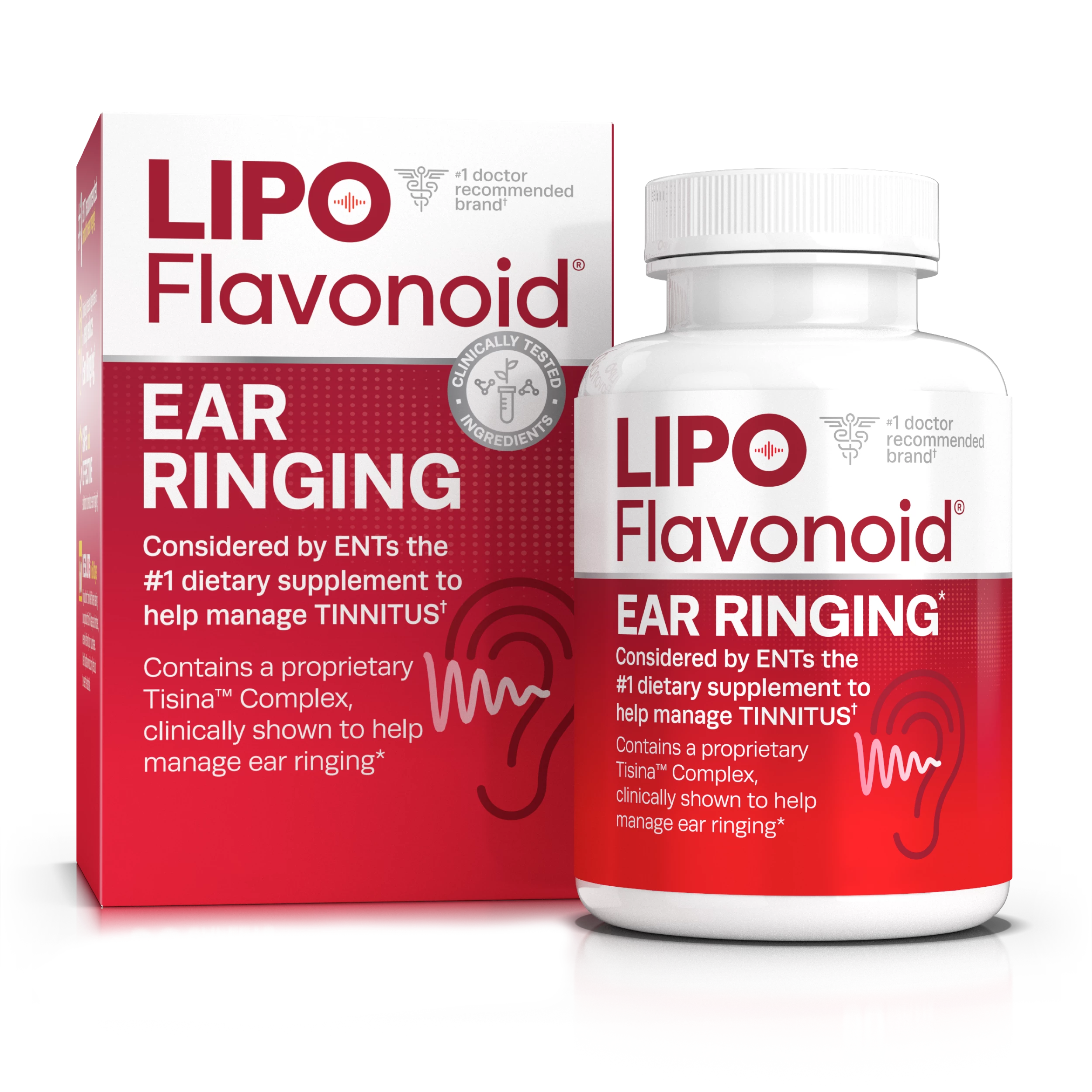
Consider a nutritional supplement to help manage tinnitus symptoms.
According to a recent survey of 250 ear, nose and throat specialists (otolaryngologists), 100% recommend nutritional
supplements to their tinnitus patients and 85% recommend the brand
Lipo-Flavonoid® specifically.7
Lipo-Flavonoid® Plus, which includes bioflavonoids for tinnitus,
when taken correctly,
may help alleviate ringing in the ears. There’s even a
money-back guarantee
if you don’t experience relief after 60 days of as-directed use.
We hope that National Protect Your Hearing Month helps you kick off lifelong ear-healthy habits—for you and your family.
References
- Noise-induced Hearing Loss. National Institute on Deafness and Other Communication Disorders website https://www.nidcd.nih.gov/health/noise-induced-hearing-loss . Accessed September 28, 2016.
- NIDCD Recognizes National Protect Your Hearing Month and National Audiology Awareness Month. https://www.nidcd.nih.gov/news/2014/... . Accessed September 28, 2016.
- October is National Protect Your Hearing Month. Hearing Loss Association of America website https://www.hearingloss.org/resources/hearing-life-e-news-october-2024/ . Accessed September 28, 2016.
- Too Loud. Too Long. It’s a Noisy Planet, Protect Their Hearing. NIDCD website https://www.noisyplanet.nidcd.nih.gov/parents/too-loud-too-long . Accessed September 28, 2016.
- Occupational Noise Exposure. U.S. Department of Labor https://www.osha.gov/noise . Accessed September 28, 2016.
- April 2016 Survey. Clarion Brands Inc. Data on file.