




Earwax Resources
Earwax is a natural, protective part of ear health, and most of the time ears clean themselves. Here’s what causes buildup, the signs to watch for, how to safely manage it at home, and when to see a healthcare provider.
See how to manage buildup safely
What Is Earwax?
Earwax, also called cerumen, is a natural, protective substance produced by glands in the ear canal that lubricates the canal, traps dust and debris, and helps prevent infection. Without earwax, says the American Academy of Otolaryngology-Head and Neck Surgery, our ears would be dry and itchy.
Usually, our ears and earwax are self-cleaning. Thanks to jaw motions (like chewing and talking) and cell turnover, old wax moves from inside the canal to the ear opening, where it is either washed away during bathing or flakes off on its own. Sometimes, however, earwax can build up and cause itchiness or a slightly “full” feeling.
Signs of earwax buildup
of people over 12 have impacted earwax — rising to 32% of people over 70
of ear infections (otitis externa) in children have been linked to cotton swab use
What Causes Earwax Buildup?
Age
Earwax becomes drier with age, so buildup is more likely in people over 55. When wax is produced or pushed deeper faster than the ears can clear it, it can collect in the narrow part of the canal.
Hearing aids, earbuds and earplugs
Frequent use of hearing aids, earbuds, or earplugs makes buildup more likely. Items in the ear can push earwax further in, causing more severe buildup or blockage.
Cotton swabs and other objects
Cotton swabs and similar items can stimulate more earwax production and push wax further into the canal, potentially irritating delicate ear structures.
Read: Are Cotton Swabs Bad for Your Ears?Buildup is also more likely in people who have more ear hair, skin conditions like eczema, narrow or unusually shaped ear canals, developmental disabilities, and in young children.
What is earwax (cerumen) impaction? Full guideHow to Safely Manage Earwax
The right approach depends on how severe the buildup is. Guidelines from the American Academy of Otolaryngology-Head and Neck Surgery recommend these options — talk to your healthcare provider if symptoms continue or get worse.
Give your ears time
Because ears and earwax are naturally self-cleaning, buildup can sometimes go away by itself. If you choose to wait, contact your healthcare provider if your symptoms continue or get worse.
Read: Earwax Buildup and What You Need to KnowWax-softening drops
Over-the-counter ear drops and earwax cleansing kits (cerumenolytics) break down earwax so it can work its way out on its own or with warm-water washing. For milder cases, they are generally the safest starting point at home.
Irrigation by a healthcare provider
A provider can clear buildup by gently streaming warm water into and out of the ear. Irrigation is not advised for people who get frequent ear infections, have ear tubes, or have a damaged eardrum.
Read: What Is Earwax (Cerumen) Impaction?Removal by a healthcare provider
For severe cases, a healthcare professional can remove impacted earwax with a special instrument, often in combination with wax-softening drops or irrigation.
Never use cotton swabs or other objects
Because the inner ear contains delicate structures, never attempt physical earwax removal on your own. Objects in the ear can push wax farther in and cause irritation, infection, or injury.
Read: Are Cotton Swabs Bad for Your Ears?How Does the LIPO Earwax Cleansing Kit Work?
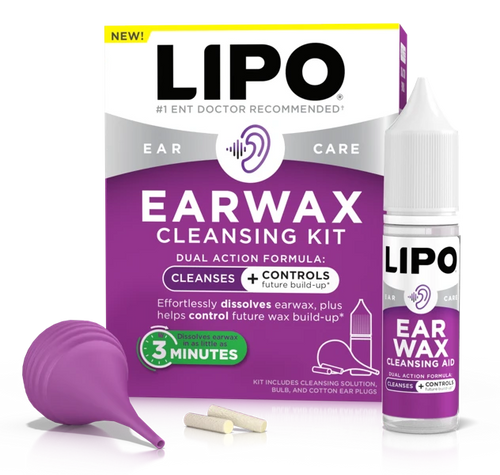
It doesn’t just soften earwax — it dissolves it, with 2-in-1 action to dissolve and cleanse.
Propylene glycol and sodium bicarbonate break down stubborn earwax into a soap-like substance so it can wash out, plus gluconolactone, a trusted skincare ingredient that hydrates and exfoliates skin. It helps cleanse the ear canal and starts dissolving earwax in minutes in laboratory testing.
Read the full picture
- The Earwax and Ear Ringing Connection Why buildup can cause ringing, and what to do if it doesn't clear.
- Watch: Earwax Dissolving, Not Just Softening The test-tube demo from the product page, in one place.
- LIPO Earwax Cleansing Kit What's in the Kit, and how it compares to the Aid.
- LIPO Earwax Removal FAQs How often to clean your ears, stubborn wax, and how LIPO differs from peroxide drops.
- Find LIPO in Stores Where to buy the Kit and Aid near you.
Earwax FAQs
How do I get rid of earwax buildup?
Most of the time, you don't need to: ears clean themselves. For symptoms, over-the-counter wax-softening drops (cerumenolytics) are generally the safest starting point for milder cases. Never use cotton swabs or other objects, and talk to your healthcare provider if symptoms continue or get worse.
How often should you clean your ears?
Beyond a gentle washcloth to your outer ear, no help from you is necessary. In fact, according to the American Academy of Otolaryngology-Head and Neck Surgery, ears ideally never need to be "cleaned."
Can earwax cause ringing in the ears?
Yes, earwax can cause ringing in the ears, or tinnitus. The National Institute on Deafness and Other Communication Disorders reports that earwax buildup can cause ringing in the ears when earwax blocks the ear canal. Earwax buildup can also prevent your eardrum from vibrating as it should in reaction to sound waves, leading to tinnitus and muffled hearing. Impacted earwax can also cause tinnitus.
Can earwax buildup cause dizziness or vertigo?
Yes. Excessive earwax buildup can cause dizziness and vertigo, particularly when wax fully or partially blocks the ear canal and interferes with the inner ear's normal function. If your vertigo persists after cleansing, see a healthcare provider, since other inner-ear conditions can produce similar symptoms.
Are cotton swabs bad for your ears?
Experts say that cotton swab use is a common cause of earwax blockages, because swabs tend to push wax deeper into the ear canal. Research in the journal The Laryngoscope found that cotton swabs are among the most common objects that send people to the emergency department with something stuck in their ear, and the most common among adults.
Is it safe to remove earwax at home?
Never attempt physical, invasive earwax removal on your own. Inserting items like cotton swabs can cause irritation, infection, push wax deeper, or injure the eardrum. Wax softening agents (cerumenolytics) can be purchased over-the-counter and are appropriate for at-home use. For diagnosis and individual recommendations, discuss your symptoms with your healthcare provider.
When should I see a doctor about earwax?
Symptoms of ear wax impaction that warrant a medical visit include: sudden hearing loss or muffled hearing, a feeling of fullness or stuffiness in the ear, pain, itching, unexplained coughing, or dizziness.
Ready to Try LIPO Earwax Removal?
Don’t just soften earwax — dissolve it. 2-in-1 action to dissolve and cleanse, from the #1 ENT Recommended Brand for overall ear health.†